Den Empowerment Network
  • Home
    • Our Programs
    • Frequently Asked Questions
    • Project Reports
    • About Us
  • School of Entrepreneurship
    • DENSE Registration
    • Aim & Objectives
    • Deep Class Review
    • Deep Students Blog
    • DEEP IAS TEST SERIES >
      • DEEP IAS TEST SERIES-2
      • DEEP IAS TEST SERIES-३
      • SSC Mock Test Part-2
      • SSC Mock Test Part-3
      • SSC Mock Test Part-4
  • Photo Gallery
    • 2018
    • 2017
  • Matrimonals
    • Matrimonial Form
  • Members Area
    • Meet DEN Members
    • Employment opportunties
    • Project Reports
    • DEN Webmeet
  • Books & Writings
  • OUR BUINESS HOUSES
  • Join Hands
  • DEN Blog
  • Contact Us
  • New Page
  • SSC Mock Test 20 May2018
  • Enrollments
  • 10 feb 2019
  • Deep Survey
  • New Page
  • Objectives
  • Tata Power Vendor Meet
  • Empowerment School
  • Covid-Help
  • रोजगार सेवा

DEN PROJECT REPORTS

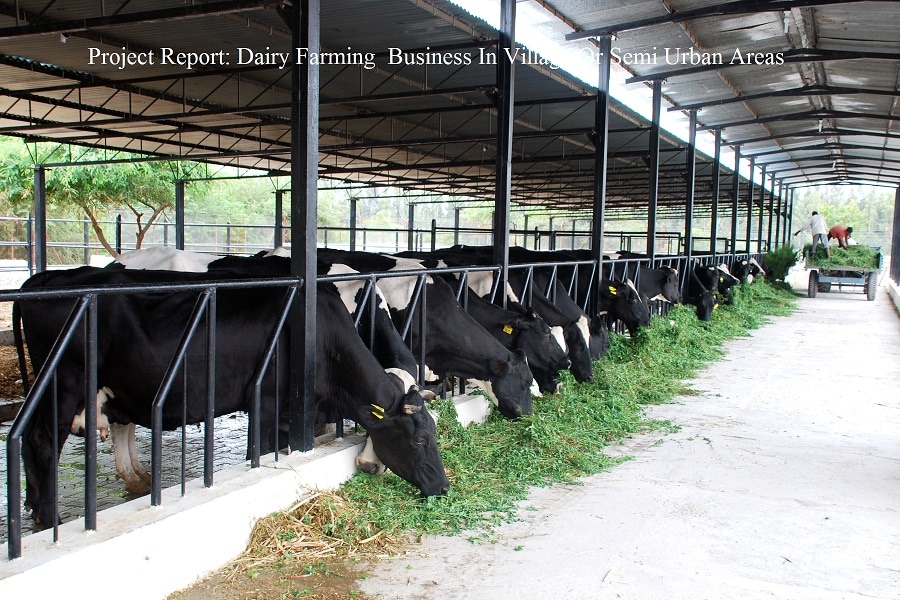
DAIRY FARMING  BUSINESS IN VILLAGE OR SEMI URBAN AREAS

6/6/2017

0 Comments

 
Picture
  •  We have assumed that a 5 to 10 persons make a GROUP and shall start the Diary unit.
  • The size of Dairy Unit can be decided based on the PROMOTERS PREFERENCE .
 
(a) Minimum economic size of unit shall comprise of 10 milch animals, with the second option of 10 animals  being purchased after a lapse of 6-8 months.
 
(b) Financial assistance for meeting feed requirement for a period of one month @ 4 kg of concentration per day per animal (total 120 Kgs per animal) shall be provided.
 
(c) Composite loan for purchase of milch animal, meeting cost of feed for one month and growing fodder will be extended to the beneficiaries as medium term loans on the same terms and conditions as applicable to term loans
for purchase of milch animals.
 
(e) Facility of loan to meet cost of feed and fodder for 3 months in addition to loan for purchase of milch animals for such borrower(s) who are not capable of providing feed and fodder to begin with will continue. For other items on receipt of revised unit cost approval as stated above, finance will allow production credit for one cycle for raising fodder crops and also

ELIGIBILITY
(a) The intending  Individuals  should be having experience in maintenance of milch animals and having Training in Dairy  Farming Activity.
 (b) He should be landless agricultural labourer or farmer/any individual who has arrangements for supply of adequate quantity of fodder.
 (c) Activity should be economically viable.
 (d) He should have shed/accommodation for keeping the animals or should have adequate space for constructing the shed for keeping the animals.

MILCH ANIMALS QUALITY TO BE CONSIDERED FOR THIS PROJECT
  • 1. Cross bred cow(s)
  • 2. Buffaloes -
  • 3. 2 Graded Murrah buffaloes
  • 4. Cross bred calf rearing


TECHNICAL ASPECTS AND POINTERS TO BE KEPT IN MIND FOR GOOD CATTLE MANAGEMENT:
Major differences between milch cattle of good quality established indigenous breeds/cross bred cows and non-descriptive local cows are given here under to emphasize upon keeping only good quality cattle for running the dairy enterprise efficiently.

Milch cattle of 
Established breed/    
                                           Non-descript
Cross bred cows                                                     local cows
Average age at calving 2.0 - 2.5 years                   3.5 - 4.0 years
Average milk yield/lactation 1800 - 2800 litres       200 - 400 litres
Average dry period 3 months                                 6 - 8 months
 
Further, following points, apart from quality of cattle, need to be kept in view: -

1. Housing:
Proper housing arrangements are required for protecting animals from extreme climates, diseases, predators and mischievous elements. The cost of housing, however, has to be contained especially in smaller sized dairy units. The dairy shed should be at higher elevation to offer good scope for rainfall and drainage with rough flooring easy to clean., well ventilated and having proper feeding and watering space. An animal should be provided a space nearly 20-25 sq. ft.

2. Feeding:
Feed requirement depends upon body weight of the animal, level of milk production, state of pregnancy and the type of fodder and feed ingredients i.e. roughages (succulent and dry fodders) and concentrates (cereals, oil cakes, animal proteinsupplement, feed additives).

Feeding Schedule for cows and buffaloes in milk should more or less conform to the following table: -
 

Green fodder (kg)     Dry fodder(kg) of legume and non-legume      Concentrate mixture
    
40                                  Nil                                                     40% and 50% of milk production in cowsand buffaloes, respectively.
30                                          2                                                                       --do--    
20                                          3                                                               3 Kg for Maintenance and as above.    
10                                          5                                                                         ---do---    
5 or below                          6                                                             2 Kg for maintenance and as above.
 

In case of pregnancy, animal should be dried by 7th month of pregnancy and provided 20-30 Kg green fodder, 2 Kg dry fodder, 1 Kg of concentrate mix and 30-60 gm. of mineral mix and 30-60 gm. of common salt everyday during last 2 months of pregnancy. (During dry period animal will build up the body reserves lost in lactation and will require additional nutrients to support the fast growth of foetus which takes place in the last quarter of the pregnancy.
 
Breeding:
It is desirable to breed the animal only after it attains proper body weight. Normally, the stage reaches in 15-18 months of age for exotic/cross bred animals and 24-30 months in case of indigenous cows/buffaloes.
 
Proper feeding and care of female cows shall help reducing the age of first calving substantially. The period between the consecutive calving (calving interval) should also be kept at the minimum for deriving optimum benefits from the dairy enterprise. This can be done by reducing the period from calving to subsequent conception and the pregnancy period is of fixed duration only.
 
It is worthwhile to keep the following information in view of this regard: -
(i) Average length of pregnancy Cows 280 to 285 days Buffaloes 300 to 305 days 
(ii) Average length of oestrus cycle 21 days 
(iii) Average length of oestrus time 24 hours 
(iv) Period of maximum fertility when insemination/service should take place. 8-12 hours from onset of heat. 
(v) Minimum time gap for insemination/service after calving 60 days (Normally healthy animal comes in heat within 48 days after calving) 
(vi) Useful reproductive life of cattle 10-12 years.
 Infertility often tends to be a major reason for economic losses in dairy.

IMPORTANT;-
In view of the advantage of artificial insemination either with liquid semen or frozen semen, every emphasis should be laid on making use of all facilities available from the State Animal Husbandry Department, Krishi Gyan Kendra, etc.
  
Health Cover:
  1. Many complications and diseases can be avoided if the animals are managed properly under hygienic conditions and precautions are taken to prevent the animals from coming in contact with the diseased animal.  
  2. The dictum of “prevention is better than cure” need to be brought home by getting the animals vaccinated timely against bacterial (Haemorrhagic Septicaemia (HS), Black Quarter (BQ), Anthrax) infections and viral diseases (Rinder Pest (RP), Foot & Mouth Disease (FMD)).  
  3. Control measures in respect of internal and external parasites should also be undertaken on regular basis to guard against diseases, de-worming cattle at the onset and after monsoon, spraying/disinfecting the cattle/shed, etc., should also be undertaken.
  4. Prompt veterinary aid should be availed for treatment after the onset of disease.
  5. Record keeping in respect of vaccination control and treatment measures should be encouraged to indicate management of the dairy unit. .

MILK FLOW CHART FOR TWO BUFFALOES
1. Lactation Period (LP) - 280 days.
2. Dry Period (DP) - 120 days.       
The above period is indicative  which provide information to purchase the 2nd dose of animals to maintain the production of milk in the Dairy unit.
NOTE: Animals are purchased at an interval of 6 months and after 10 days of calving.

COST OF PROJECT (Estimates)
Sr No    Gist of Expenses         Amount Rs in Lacs        Remarks
1    Land @1.5acres                60.00            If Land is owned the cost can be reduced 
2    Construction of shed covered area     40% @600/-30.00    If shed is owned then cost can be reduced
3    Water connection(tubewell)          3.00    
4    Electricity                1.00    
5    Pits for putting dung             1.00    
6    Purchase of Animals(20 animals) @Rs1.20Lacs per animal     24.00    
7    Vehicle with tank for Transporting Milk     9.00    
8    Utility Vehicle for Fodders        7.00    
7    Margin for working capital         25.00*    
        Total                160.00    
  • It includes the expenses of fodders,medical insurance and labour and other contingency expenses on recurring basis.
  • The cost of project can be modified/adjusted based on the assets owned by the PROMOTERS like Land,Building shed,Vehicles etc.


MEANS OF FINANCE;(ESTIMATES)
Sr No         Particulars                                                                   Amount Rs in Lacs      Remarks
1  Own Contribution(10 persons investing Rs2.00Lac each in unit)  20.00    Amount is to be deposited in bank account in the name of proposed unit.
2    Subsidy(NABARD) 30% on CAPEX*                                              40.00        To be claimed by bank on sanction of bank loan 
3    Bank Loan                                                                                          100.00    Bank loan to be released in phases
    Total                                                                                                        160.00    
  • CAPEX means the cost of fixed assets  Rs135.00 Lacs incurred on project.
 
INCOME FLOW (PROJECTIONS)
No of ANIMALS in unit in First stage= 10
Milk Production                                = 40 liters per day per animal
Total Milk Production                        = 400 Liters
Cost of selling Milk per liter             = Rs45.00 per liter
Cash Flow per Animal                     = Rs45.00X400 liters=Rs18000/- per day
Total cash flow in a month             = Rs18000X30 days=Rs540000/-
 
 
MARKETING of PRODUCTION
 
Based on the market scenario, the milk production is having a brisk demand of households,Halwai,Milk related products units e.g.AMUL,MOTHER DAIRY  etc. hence market of milk is readily available and cash flow shall be aintained based on the FAT ratio required for the consumers.
 
 
PREPARED BY SH. SATISH KUMAR SHERVAN
0 Comments


Leave a Reply.

    Various Authors

    DEN Empowerment Network is initiative of Progressive people working for deprived & disadvantaged sections of society.

    Archives

    June 2018
    July 2017
    June 2017
    April 2017

    Categories

    All

    RSS Feed

Powered by Create your own unique website with customizable templates.
  • Home
    • Our Programs
    • Frequently Asked Questions
    • Project Reports
    • About Us
  • School of Entrepreneurship
    • DENSE Registration
    • Aim & Objectives
    • Deep Class Review
    • Deep Students Blog
    • DEEP IAS TEST SERIES >
      • DEEP IAS TEST SERIES-2
      • DEEP IAS TEST SERIES-३
      • SSC Mock Test Part-2
      • SSC Mock Test Part-3
      • SSC Mock Test Part-4
  • Photo Gallery
    • 2018
    • 2017
  • Matrimonals
    • Matrimonial Form
  • Members Area
    • Meet DEN Members
    • Employment opportunties
    • Project Reports
    • DEN Webmeet
  • Books & Writings
  • OUR BUINESS HOUSES
  • Join Hands
  • DEN Blog
  • Contact Us
  • New Page
  • SSC Mock Test 20 May2018
  • Enrollments
  • 10 feb 2019
  • Deep Survey
  • New Page
  • Objectives
  • Tata Power Vendor Meet
  • Empowerment School
  • Covid-Help
  • रोजगार सेवा